-
trade deficit from raising causing more foreign goods to be bought
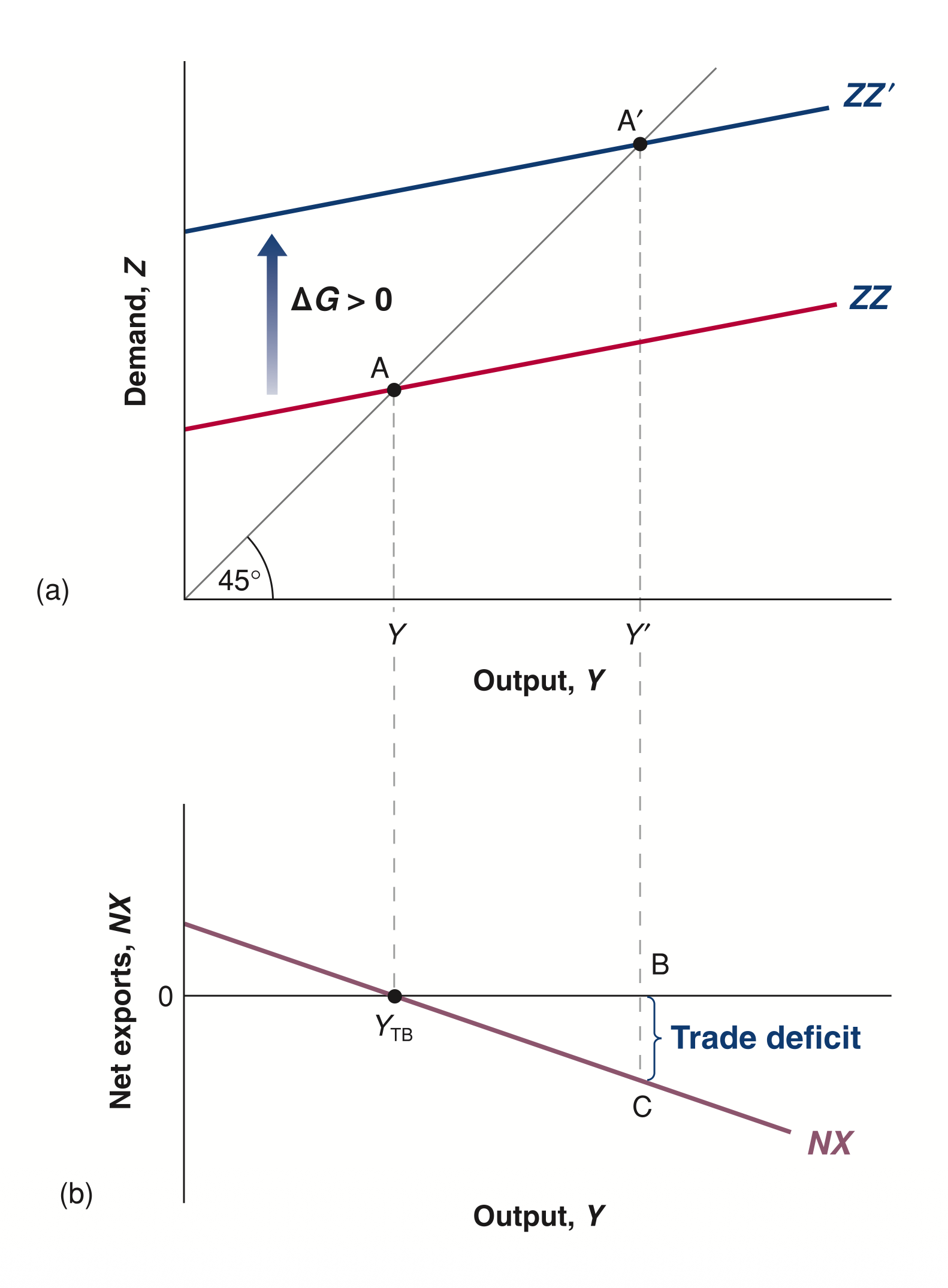
-
foreign output , effects on domestic economy
- foreign government spending could be taking place, etc.
- first assume not knowing where came from
-
domestic demand for goods,
- function of income
- drawn as , steeper than
- difference between and is net exports,
- if trade is balanced at point A, both intersect there
-
effects of foreign output increase
- higher foreign output → higher foreign demand
- higher foreign demand → higher foreign demand for domestic goods
- increase in foreign output causes increase in domestic exports, by amount
- net exports and both go up by
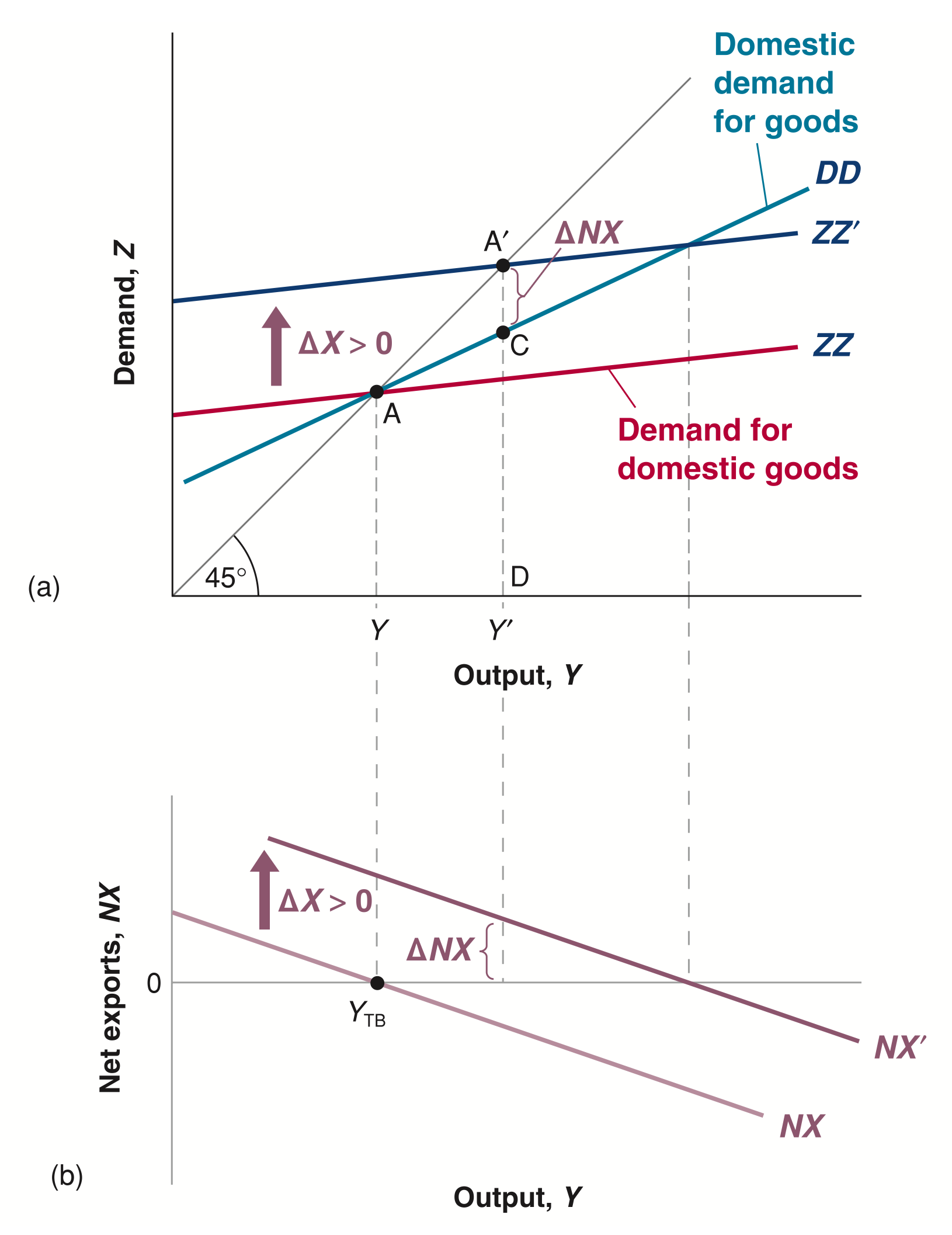
- higher foreign output → higher foreign demand
-
is always distance between and at given
-
increase in always shifts up, below means surplus
-
domestic demand increase → increase output, bad
-
foreign demand increase → increase output, better
-
real exchange rate given as
- equal to nominal exchange rate times price level divided by foreign price level
-
real depreciation → fall in
- means domestic goods are cheaper compared to foreign goods
-
-
- very dependent on real depreciation in exports, imports, relative price ()
- decrease in causes increase in by Marshall-Lerner condition (assumed true)
-
depreciation leads to shift in demand, both foreign and domestic, towards domestic goods
- leads to increase in domestic output, improvement in trade balance
-
fixing without changing output requires
- achieving depreciation to eliminate it, to shift to
- reduce government spending to shift back to
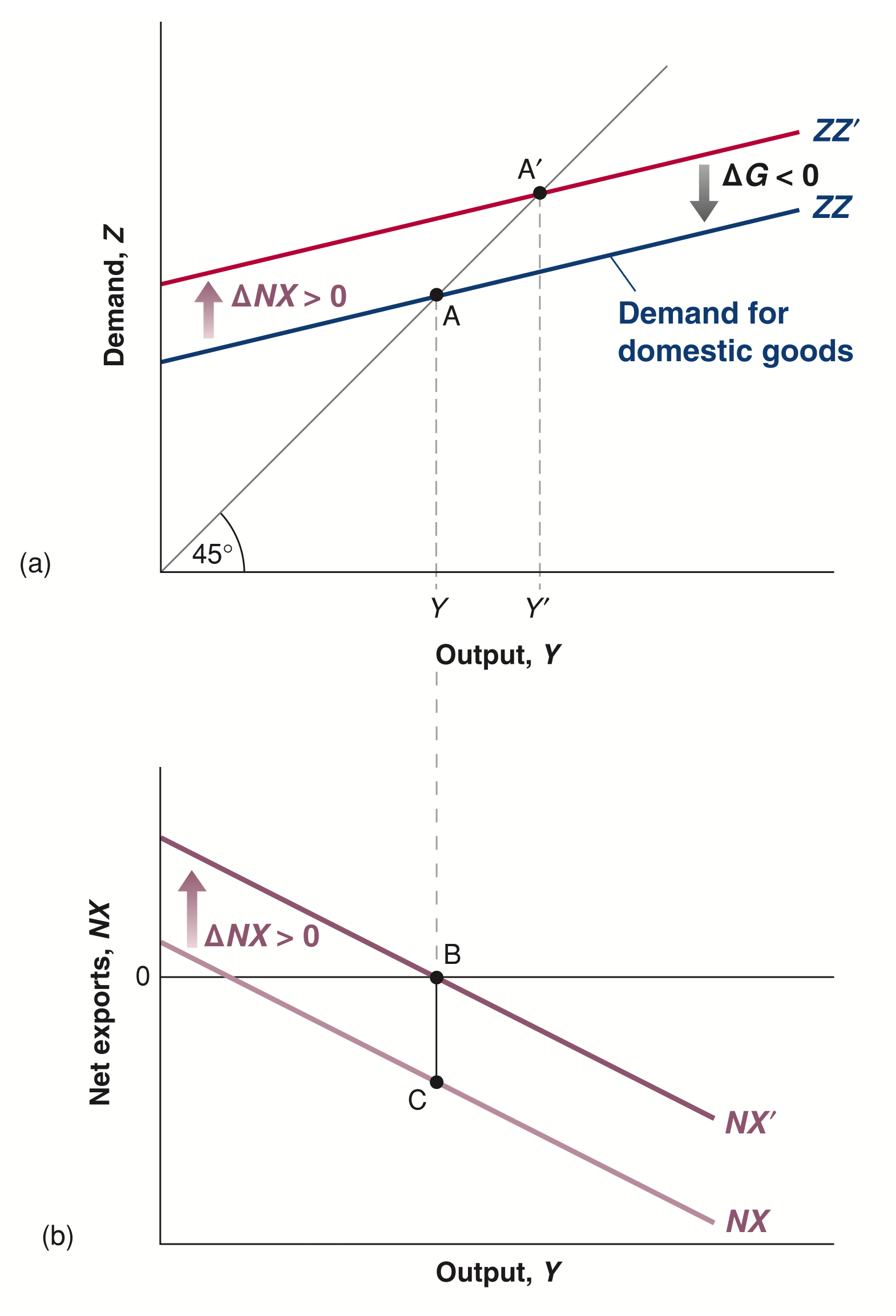
-
real depreciation leads to deterioration then improvement in J-curve
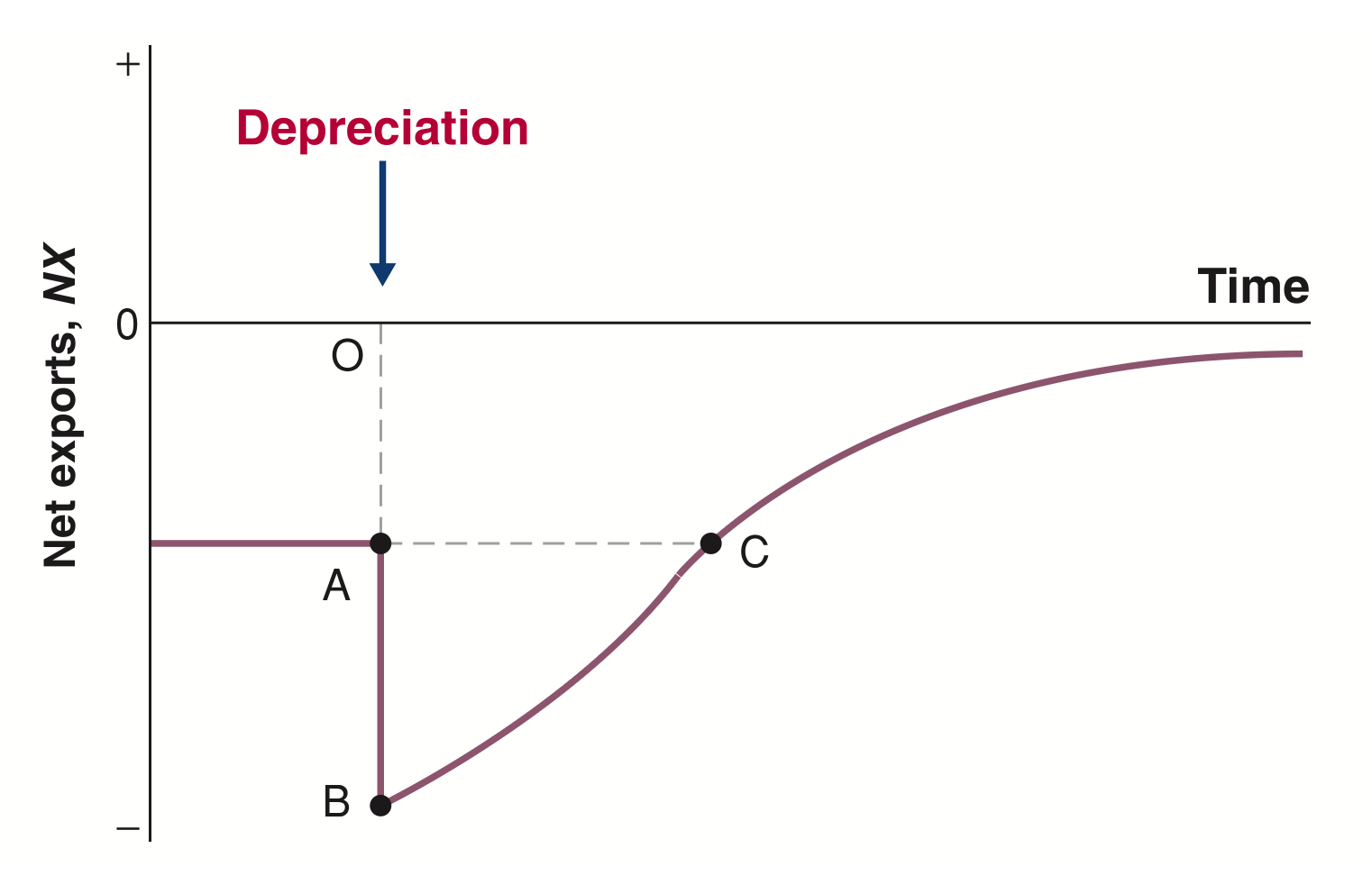
-
-
-
-
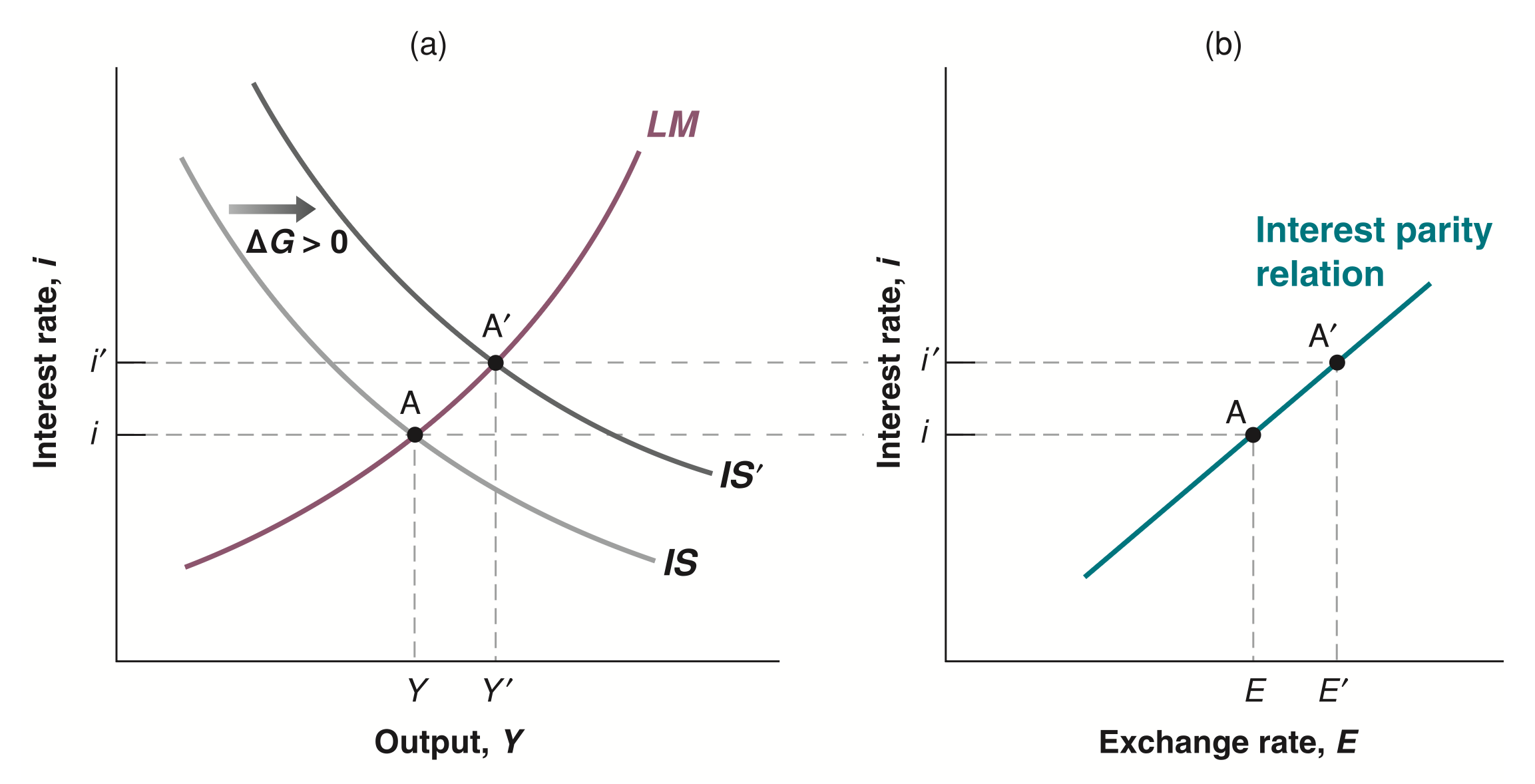
increase in government spending leads to increase in output, increase in interest rate, real appreciation
-
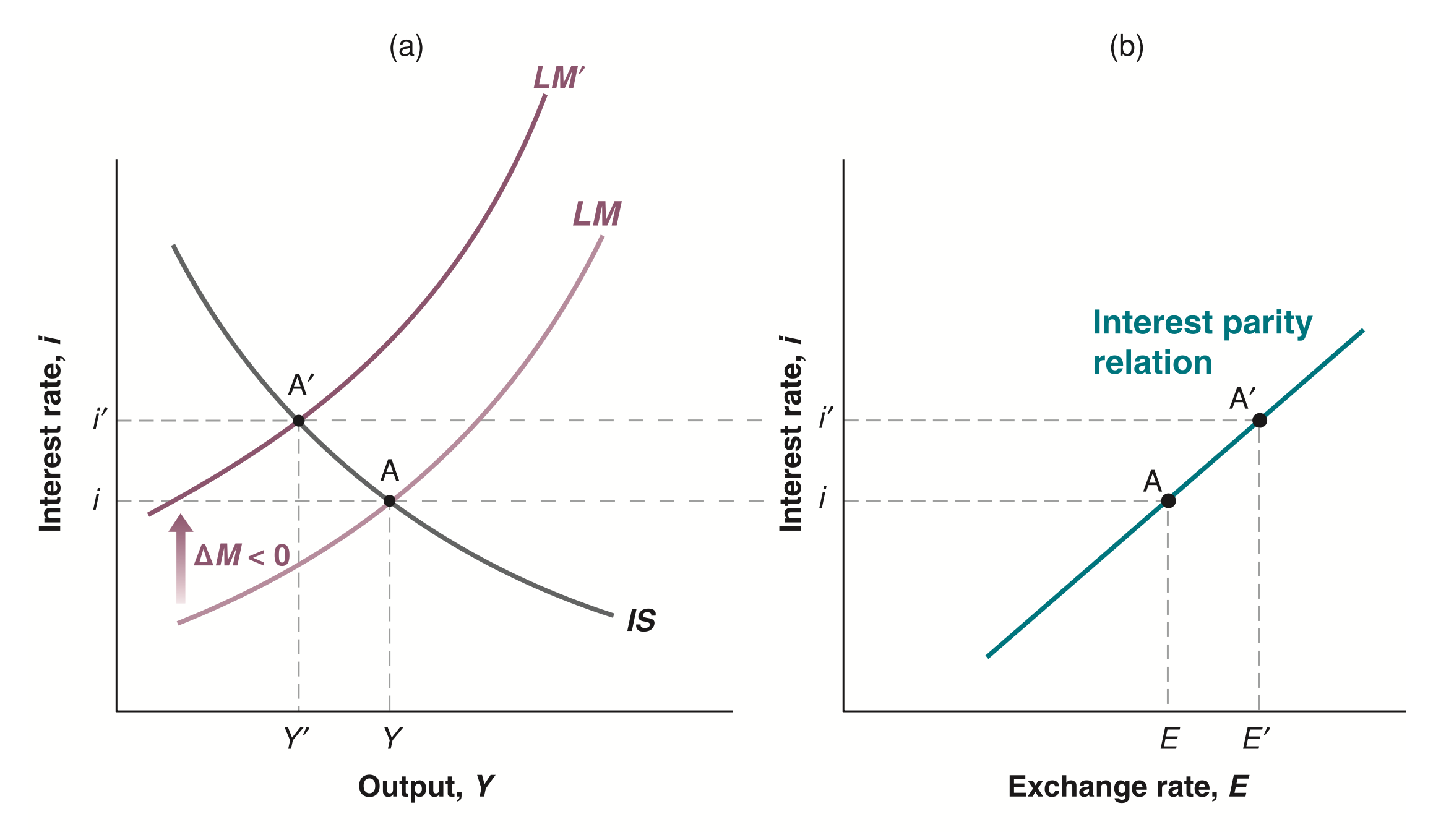
monetary contraction causes appreciation as A shifts up to A’
-
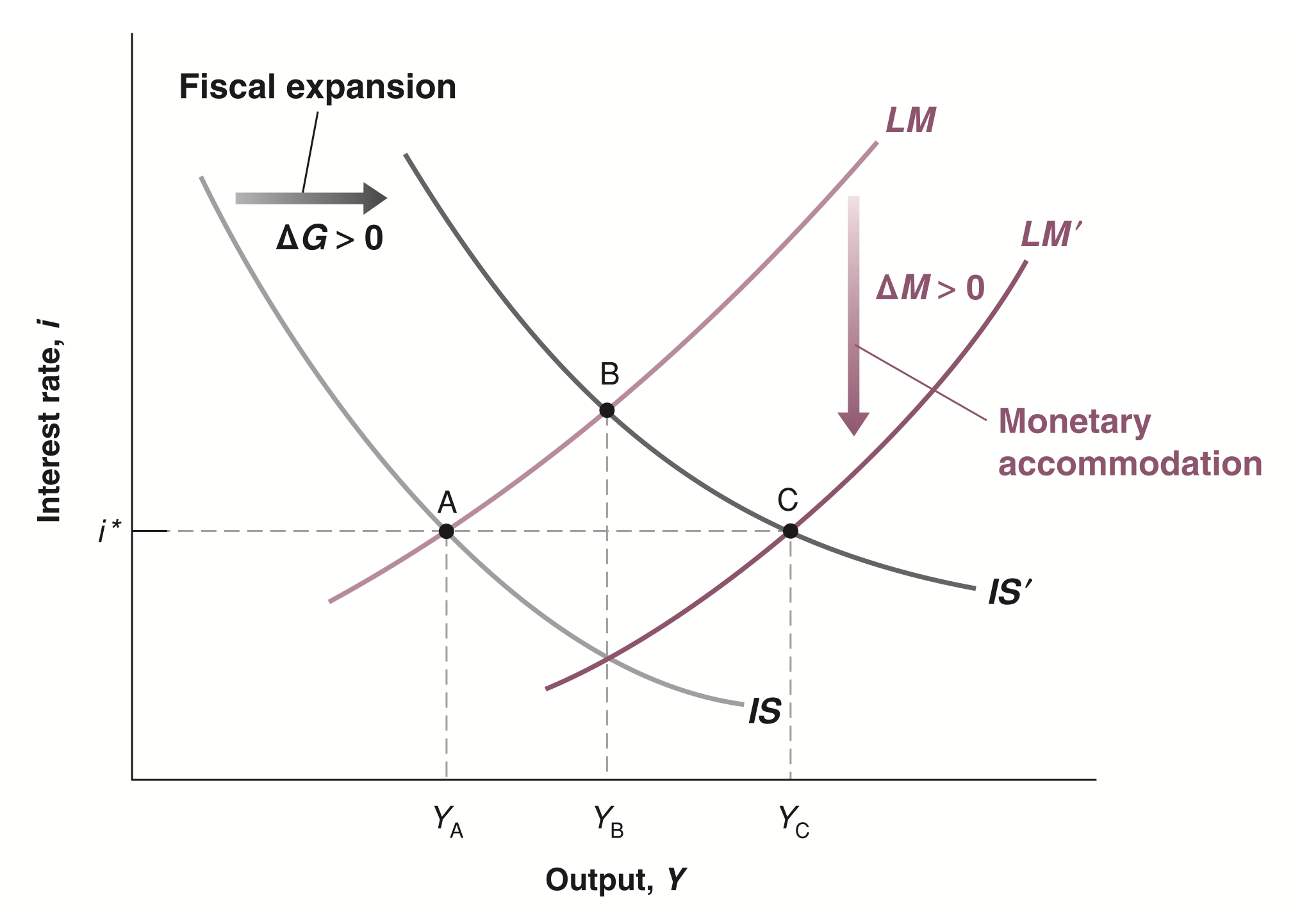
under fixed exchange rate, domestic interest rate equals foreign interest rate, causes necessary monetary accommodation to hold
-
monetary expansion causes down, up, down, depreciation, improves
- helps both and
-
fiscal policy more powerful under fixed , forced monetary accommodation