-
from chapter 3, taking
-
assuming investment was constant before (and given as exogenous)
-
here, investment is based on two factors
- level of sales: firms with increase in sales need to increase production, through e.g. additional machines or building additional plant; firms facing low sales feel no such need to invest
- interest rate: firm deciding whether to buy a new machine might need to borrow. higher the interest rate, the less attractive it is to borrow and buy machine. at high enough interest rate, additional profits from machine will now cover interest payments, and is not worth buying
-
investment relation now written as , with relationship for
- i.e. depends on production and interest rate
-
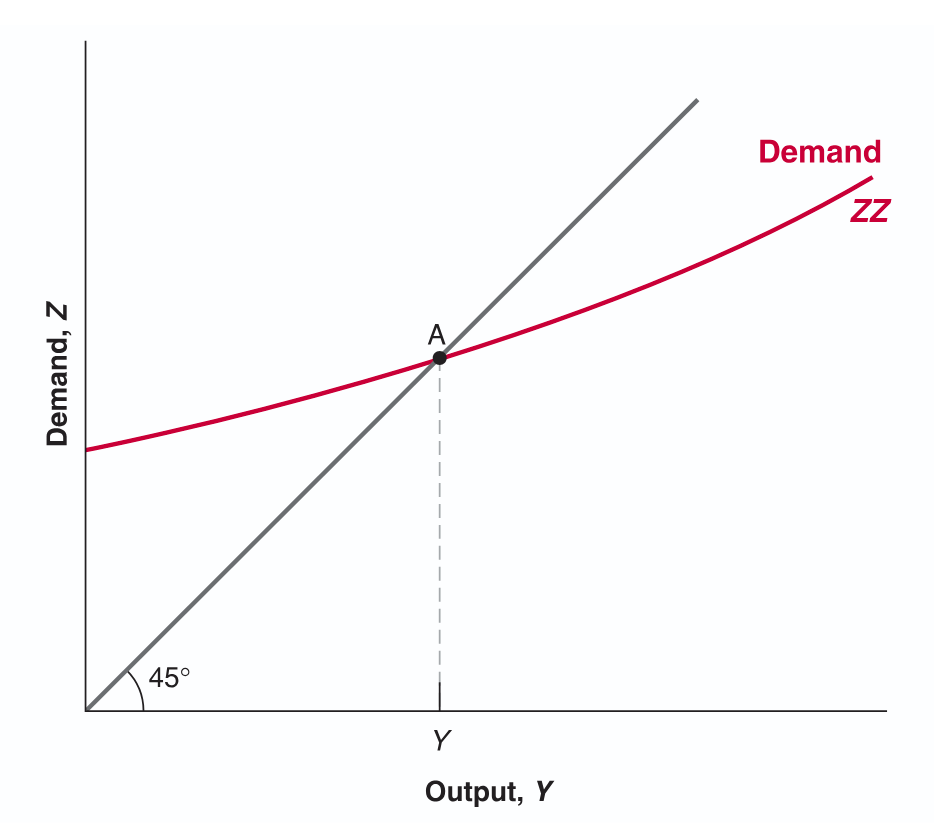
condition for equilibrium becomes
-
have curve for every given value, giving demand for a given output (not one-to-one)
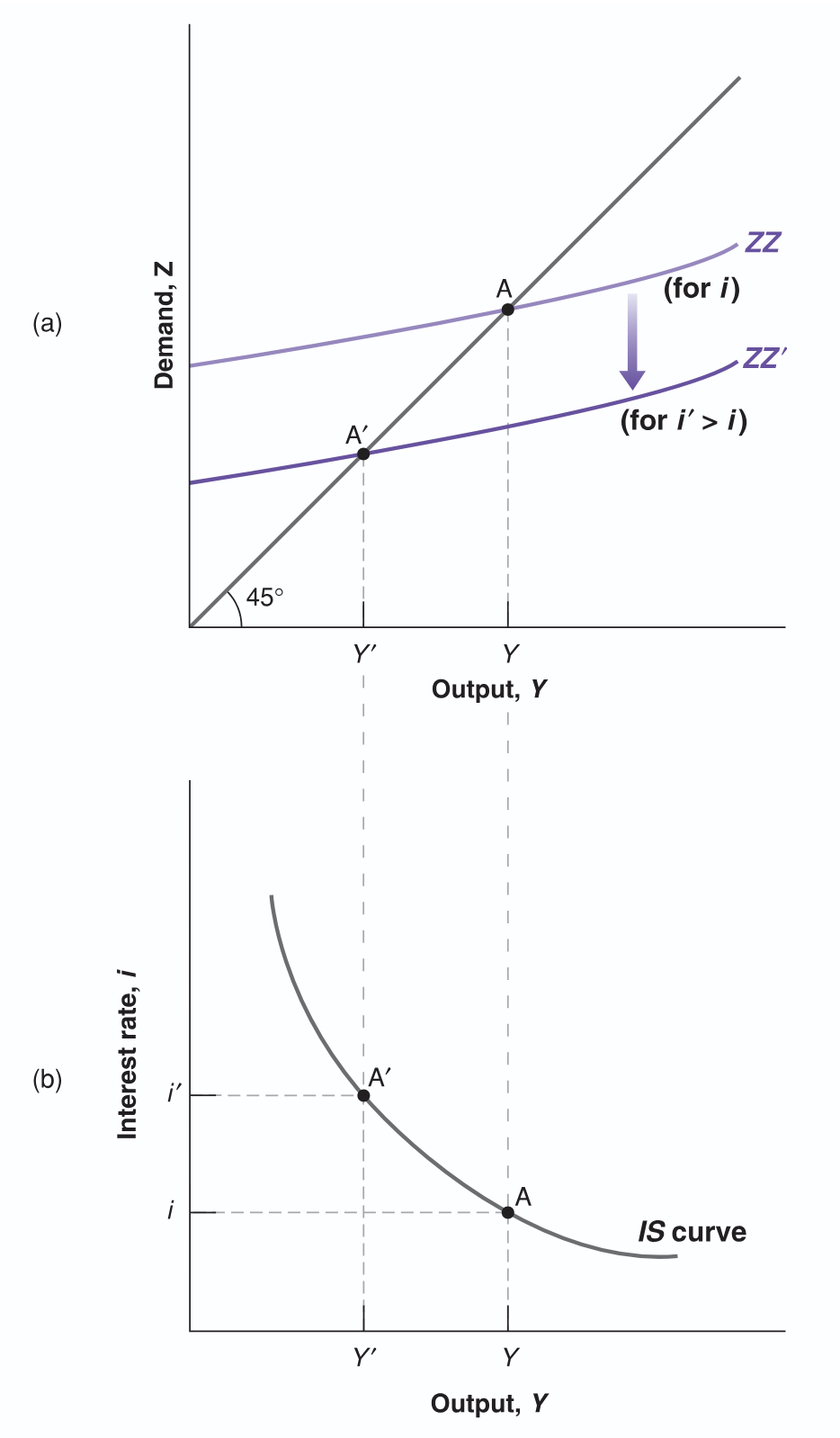
- increase in interest rate decreases investment, decrease in investment leads to decrease in output, which further decreases consumption and investment thru multiplier
- i.e. increasing moves down
- recalculating equilibrium intersection on new compared to 45° , intersection is lower
- captured by curve having a lower when is higher, and having a higher when is lower
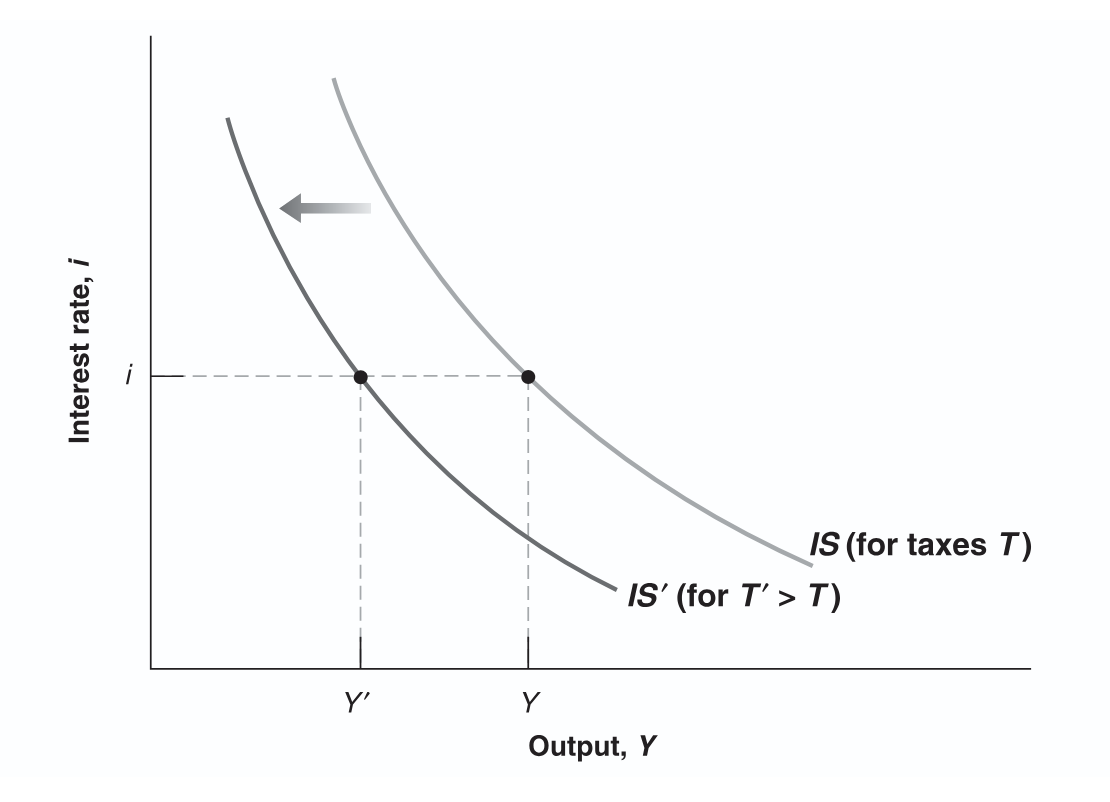
- and taken as given for a given curve, also have effects
- causes decrease in , causes increase in
- curve shifts accordingly
- taking from money market
- however, actually working with “real money”, so , removing € with price level
- money supply is a fixed vertical line
- is represented as a downward-sloping curve, based on
- equilibrium is at point where , demand equals supply, nets interest rate
- gives curve interest rate for some
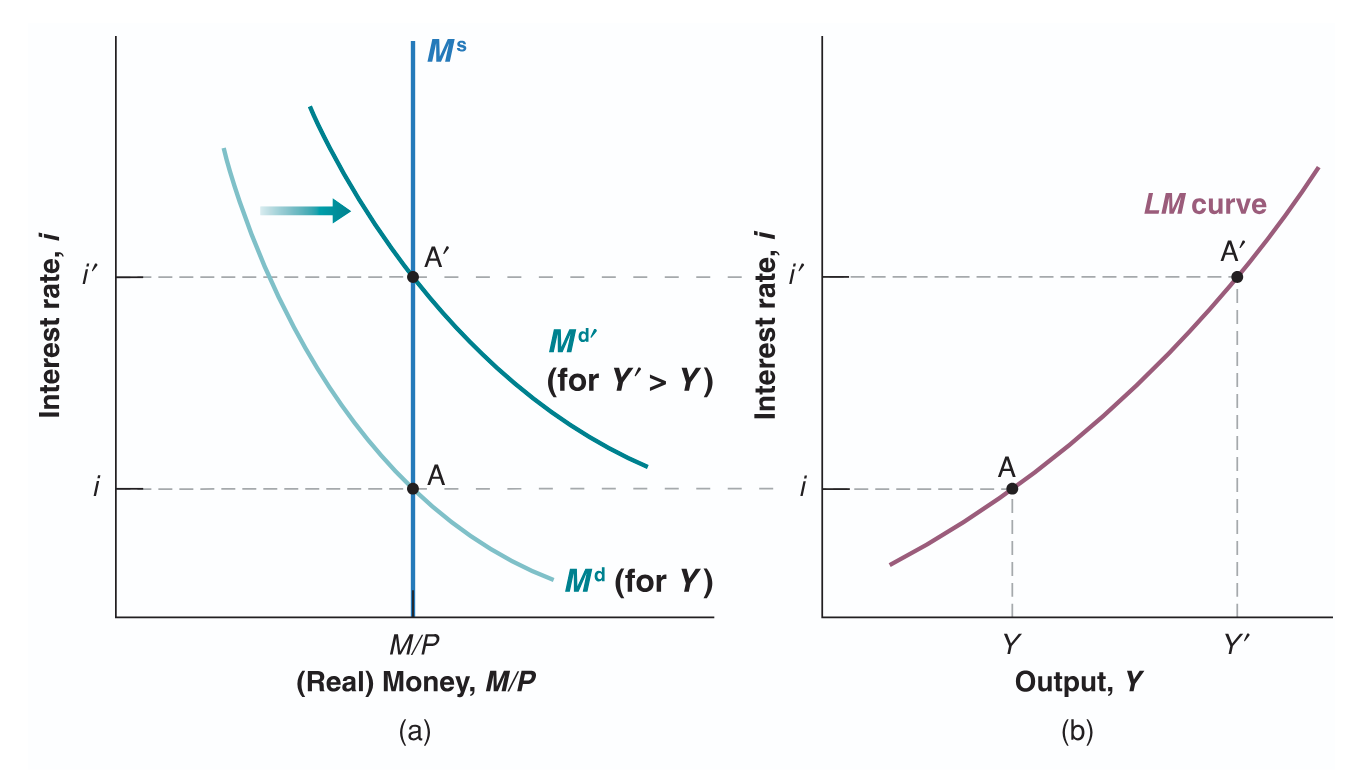
- curve slopes upwards as means demand for money is higher as income is higher, so at is also higher
- if , then curve goes down since the equilibrium happens at a lower value (more to the right)
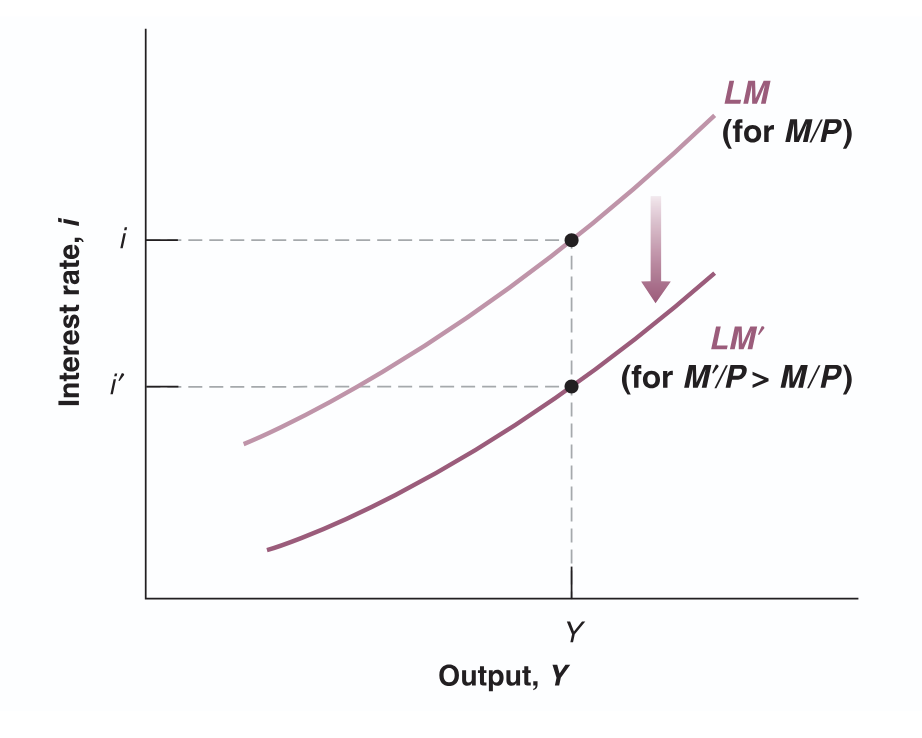
-!!
- at any point, both equilibriums must hold; thus, the and curves can be used directly
- :
- :
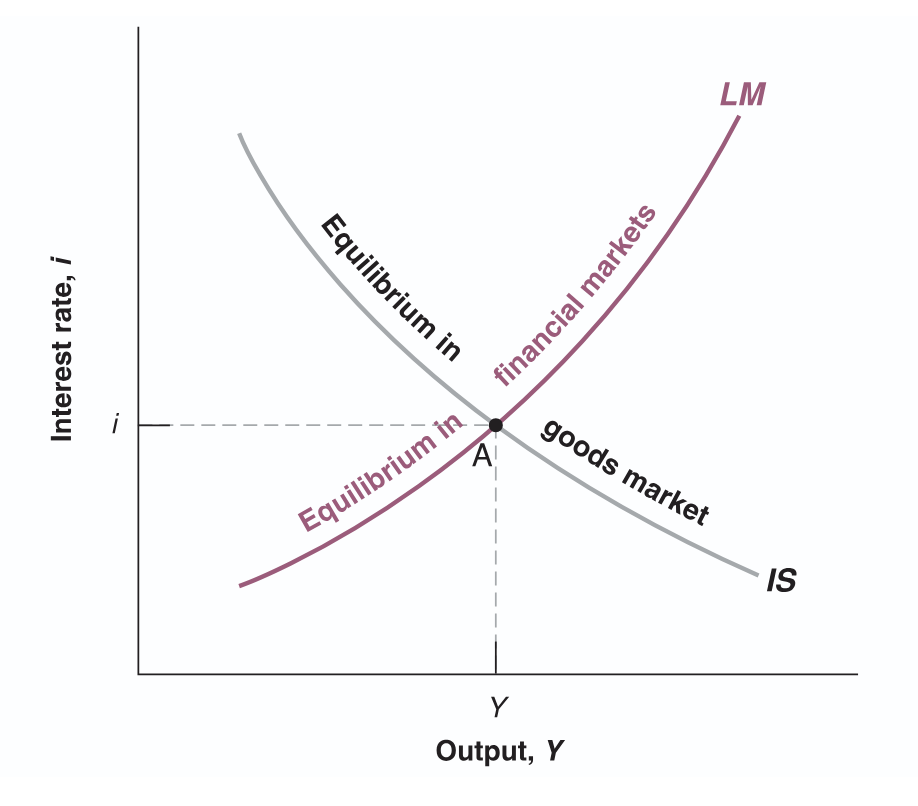
-
fiscal contraction → shifts left → is lower
-
opposite for fiscal expansion
-
monetary contraction → shifts up → is higher
-
opposite for monetary expansion